Mar 25, 2021
Have you ever compared your NFPA 70 book with a colleague and found that there were differences, though both books were the same edition of the NEC? We know that we receive a new edition of the NEC every three years, but how does the Code change between cycles?
Mar 23, 2021
In the security industry, video surveillance is by far the most eye-catching deployment. Intrusion systems alert when tripped and access control prevents unauthorized access, but no one has ever said “come look at my wall of access control panels”. The Security Operations Center (SOC) and the multitude of cameras on a video wall are always part of the tour. Video surveillance is only a tool, but it is an extremely useful tool. Video can now offer traditional security functions and with analytics, it can perform intrusion detection functions as well. This can include alerting on break-ins while giving a picture of the suspect and reducing false alarms. Cameras are being used for Identity and Access Management (IAM) functions in conjunction with access control to use facial recognition among other analytics to control access.
Mar 02, 2021
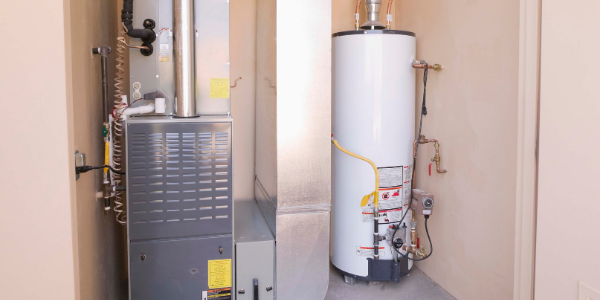
A vent is defined as a pipe or conduit that contains a passageway for conveying combustion products and air to the atmosphere. Products of combustion contain carbon dioxide, water, and sometimes carbon monoxide. Therefore, it is important to safely vent a gas furnace. Modern gas furnaces are available with efficiencies that range from 80% to 98% Annual Fuel Utilization Efficiency (AFUE) ratio. Furnaces that are 90 to 98% AFUE are considered very efficient and utilize a category 4 vent system. This means that the flue gases operate under a positive vent stack pressure with a low vent gas temperature, causing the gases to condense before discharging from the vent. Venting materials used for category 4 furnaces are those recognized by the furnace’s installation instructions such as stainless steel, PVC, and ABS. Furnaces one tier lower in efficiency use more traditional venting methods than the 90+% units. Even though these systems are associated with conventional chimneys and vents, special attention must be given to their installation.
Mar 02, 2021
If you turn to Section 250.122 in your NEC, you find information that has assisted electricians sizing equipment grounding conductors (EGC) for longer than most electricians have even been twisting wire. If you were on the job in 1968, you would have turned to Table 250.95 in your NEC for this information instead of Table 250.122, but the information was essentially the same. In 1968 you also would have found that an ungrounded (hot) branch circuit conductor protected by a 6000-amp overcurrent device required no less than a 1200 kcmil aluminum equipment grounding conductor... assuming you were using an aluminum equipment grounding conductor. That information remained unchanged for 50 years. But as the saying goes, “All good things must come to an end.”
Mar 02, 2021
Underground electrical installations can save labor hours, material costs, and provide protection to the installation. Sometimes going underground is the only logical path to get service from one point to another whether new construction or remodel work. Overall, there are not many electrical projects that don’t require a little digging in the dirt at some point. Let’s dust off the National Electrical Code (NEC) and review some Code pertaining to burial depths and standard operating procedures.
Mar 02, 2021
The COVID-19 Pandemic is fully matured, even spawning new mutations of the virus. But the light at the end of the tunnel may be near. A year ago no one thought they would be wearing masks and eating in 50% filled restaurants in August, 2020, let alone today. The Pandemic has seen companies, small and large, suffer tremendously. Many of us have furloughed employees, possibly multiple times over the last 12 months. Our industry is strong, and resilience is something most integrators know. What does resilience look like? Integrators have to change how they do business because businesses have changed how they do business. Change is hard, but in order to be resilient, we must accept change. The last year has caused customers to realize they care less about what is being sold and more about how it will help them accomplish their goals. This is prompting technology shifts in our industry to meet those goal demands.
Feb 01, 2021
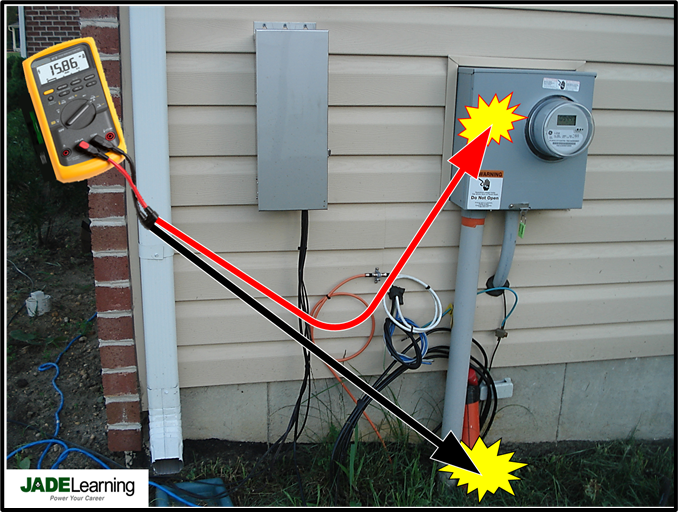
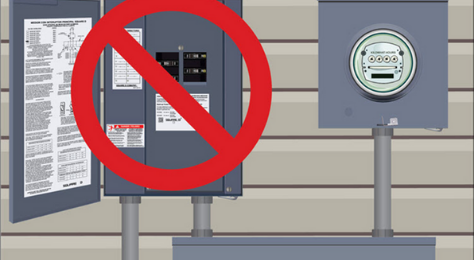
NEC Section 230.71. Six Switches or Circuit Breakers in One Enclosure. Since the 1937 edition of the NEC, the service disconnecting means used to isolate a building’s premises wiring from the utility provider’s conductors has been allowed to consist of as few as one, but as many as six switches or sets of circuit breakers. A veteran electrician would tell you that requirement (or permission, depending on your perspective) means six throws of the hand can be used to control all power on the property. Our veteran electrician is correct - if there is one electrical service on the property.
Feb 01, 2021
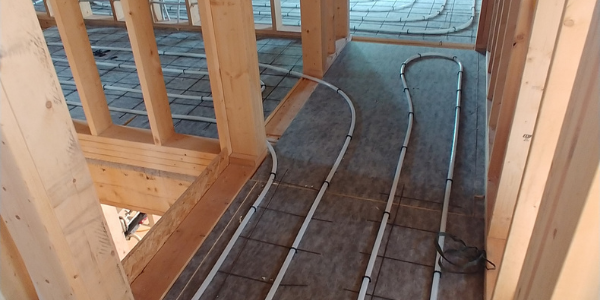
Under Floor Electric Cable and Cable Mat Systems are a great way to warm or even heat a space. These systems can be a supplemental or even a main source of heat in a variety of rooms. The systems can be installed under many types of floors such as tile, wood, concrete, vinyl, and even carpet. The manufacturers offer a variety or pre-engineered packaged units and even piece-by-piece options. The manufacturer’s step-by-step installation instructions must be used to install the heating cables, mats, spacers, thermostats, and other associated equipment. The instructions will also point us in the right direction as far as the branch circuit size but will most likely not give all of the needed information.