
AFCI or GFCI? Choosing the Right Electrical Protection
Published on July 23, 2026 by Anna Coucke | Edited by Nate Bortz

A breaker tripping at the right time can prevent a serious shock, an electrical fire, or both. That’s why proper ground fault circuit interrupter (GFCI) and arc fault circuit interrupter (AFCI) protection matter. The devices may sound similar, but they have distinct purposes. One protects people from electric shock, while the other helps protect homes from fires caused by dangerous arcing.
Modern electrical codes may require one or both systems based on the needs of the room, circuit, appliance, and local code edition. In some areas, electricians use dual-function devices to provide both on the same circuit.
What Is a GFCI?
Found throughout indoor and outdoor areas of homes, this device is designed to reduce the risk of electric shock. It monitors electricity flowing through the hot and neutral wires of a connected outlet. When the current going out does not match the current returning, it means electricity may be leaking through an unsafe path. The safeguard causes the device to shut off power when a mismatch is detected.
Class A devices are the most common and are designed to trip at very low current leakage levels, around six milliamps. That small amount of current can still create a serious shock hazard.
Where GFCI Is Required
A ground fault can happen when electricity travels through water, a damaged appliance, a worn cord, faulty wiring, or a person. This is why ground fault protection is commonly required in areas where moisture or grounded surfaces increase the risk of shock.
In dwelling units, these areas commonly include:
- Bathrooms
- Kitchens
- Garages
- Outdoor locations
- Crawl spaces
- Basements
- Laundry areas
- Receptacles near sinks
- Receptacles near bathtubs or shower stalls
The National Electrical Code (NEC) expanded rules for kitchens in 2023. The edition updated requirements, calling for ground fault protection for all kitchen receptacles, not just the outlets above the countertop. Some appliances may also require a GFCI by default, whether they are connected by cord and plug or hardwired. Listed examples include:
- Dishwashers
- Electric ranges
- Wall-mounted ovens
- Counter-mounted cooking units
- Clothes dryers
- Microwave ovens
- Sump pumps
- Vending machines
- Certain water-cooler or spray-washing equipment
Keep in mind that your city, county, or state may follow a different NEC edition or add local amendments. For example, Texas requires GFCI for air-conditioning and heat-pump equipment, while NEC does not.
GFCI Outlets vs. Breakers
Ground fault protection can come from hardware at either the receptacle or the breaker.
An outlet protects only the receptacle itself. When wired correctly through the load terminals, it can also protect downstream receptacles on the same circuit. Downstream protection should not be assumed without verification.
A breaker is installed in the electrical panel. It provides ground fault safety for the entire circuit, starting at the breaker.
Most outlets and breakers include TEST and RESET buttons. Pressing TEST shuts off power, while pressing RESET should then restore power.
If the device won’t trip or reset, feels hot, buzzes, smells burnt, or shows visible damage, it should be inspected and replaced if needed.
Common Causes of GFCI Trips
A device may trip due to moisture, damaged insulation, faulty appliances, worn cords, or wiring problems.
If a device continues to trip after being reset multiple times, there is likely a reason that needs further investigation. Repeated tripping means the device is detecting a problem, the device has failed, or the circuit needs repair.
What Is an AFCI?
This device is designed to reduce the risk of electrical fires. It monitors a circuit for arcing patterns that may indicate a dangerous fault.
An arc is what happens when electricity jumps across a gap instead of flowing through a secure connection. It’s the spark you often see in movies and television when two separate wires or conductors get too close to one another.
Some small arcs are normal, like when a high-voltage switch operates or an appliance is plugged into an outlet. More dangerous arcs can occur when wires, cords, outlets, light fixtures, or connections become damaged or loose.
A standard breaker is useful, but it may not detect every arcing condition. An AFCI monitors electrical patterns that indicate unsafe arcing and shuts off power when it detects a likely hazard.
Where AFCI Protection is Required
AFCIs are now a code requirement in many common areas of newer homes. This includes circuits that power outlets, lights, and other devices in bedrooms, kitchens, living rooms, dining rooms, hallways, and other living areas.
These areas often contain concealed wiring in walls and items that can cover outlets and cords, making it difficult to notice when damage occurs. A properly installed AFCI reduces the chance that hidden wiring or a cord problem turns into a fire.
Exact requirements can vary by location because not every city or state uses the same electrical code. A licensed electrician can confirm where these are required in your home.
AFCI Outlets vs. Breakers
Arc fault protection can also be installed in a receptacle-type device or at a breaker.
Installed directly in the electrical panel, a properly rated breaker can protect the branch circuit from the panel outward. Receptacle AFCI installed at the first outlet on the circuit should protect downstream wiring and outlets.
Most devices of either type include a TEST button. Receptacles usually include a RESET button as well. Follow the manufacturer’s instructions when testing or resetting a tripped device.
AFCI Outlets vs. Breakers
Arc fault protection can also be installed in a receptacle-type device or at a breaker.
Installed directly in the electrical panel, a properly rated breaker can protect the branch circuit from the panel outward. Receptacle AFCI installed at the first outlet on the circuit should protect downstream wiring and outlets.
Most devices of either type include a TEST button. Receptacles usually include a RESET button as well. Follow the manufacturer’s instructions when testing or resetting a tripped device.
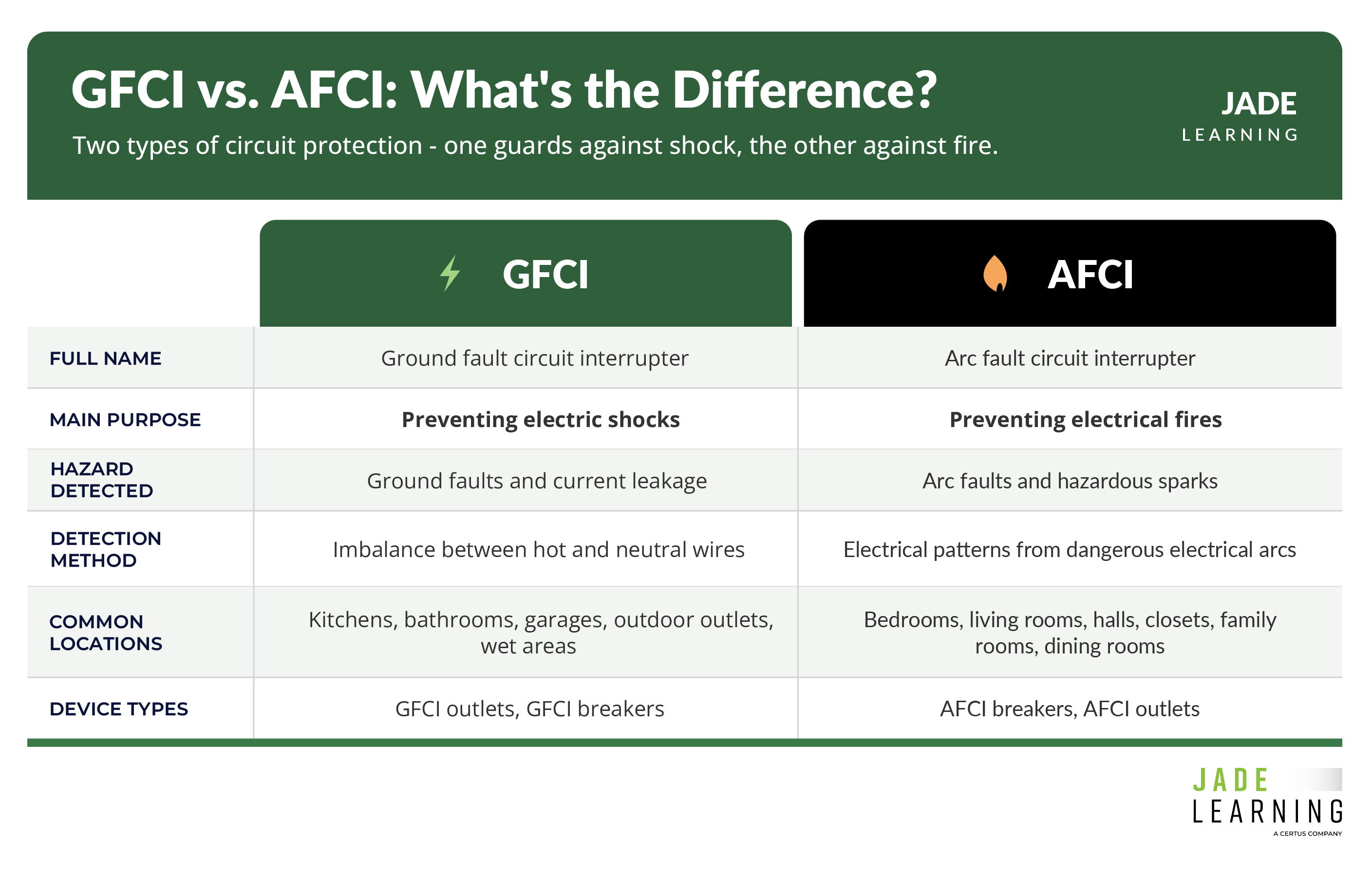
AFCI and GFCI Differences Visualized
Here's a side-by-side comparison of these two devices.
Can AFCI and GFCI Protection Be Used Together?
Yes. These devices can be used on the same circuit because they protect against different hazards.
Some rooms, such as kitchens and laundry areas, may require both types of protection under modern code rules. Electricians can provide this in several ways.
A dual-function breaker combines both types of protection at once. An AFCI breaker may also be used with individual GFCI receptacles where ground fault protection is needed. In other cases, separate listed devices may be used when allowed by code.
When to Upgrade
Older homes may not have been built to the same protection standards required in newer construction. Upgrades can improve safety and help satisfy inspection requirements during a home sale.
Knowing when to use AFCI vs. GFCI comes down to the hazard you're protecting against. Use GFCI where shock is the main concern, especially near water, outdoors, in basements and garages, and around appliances.
Use AFCI where hidden arcing and fire risk are the main concerns, especially in the common areas of the home. Use dual-function protection where both hazards need to be addressed.
When to Call a Licensed Electrician
Call an electrician before installing breakers, replacing a panel, adding circuits, upgrading kitchen or laundry wiring, or troubleshooting repeated trips.
Get help right away if you notice signs of arcing or ground faults including:
- Burning or ozone smells
- Scorch marks
- Buzzing outlets
- Warm cover plates
- Repeated breaker trips
- Visible damage
- Outlets that will not reset
A qualified electrician can determine what type of device your home needs based on current code, local amendments, your panel type, and the condition of your wiring.
Protect Your Home the Right Way
Arc fault and ground fault safety shouldn’t be treated as guesswork. The right setup for your home depends on where the circuit is located, how it is used, and what your local code requires. When in doubt, have a licensed electrician review the circuit before replacing devices or adding new protection.