
Understanding Shock Protection Boundaries Around Energized Electrical Parts and Approach Limits
Published on September 21, 2026 by Staff Writer
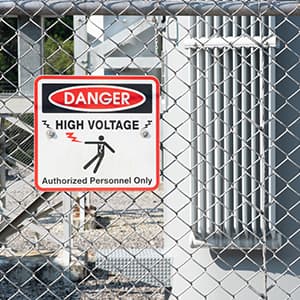
The limited approach boundary is defined by NFPA 70E as the distance from exposed energized electrical conductors or circuit parts within which a shock hazard exists. It helps keep unqualified persons at a safe distance from energized parts and reduces the risk of accidental contact.
Definition of the Limited Approach Boundary in NFPA 70E
The Limited Approach Boundary is a critical safety measure defined by NFPA 70E. It establishes a distance from energized electrical conductors where shock hazards exist. This boundary is designed to protect unqualified persons from accidental contact with live electrical parts.
Key points about the Limited Approach Boundary include:
Distance Determination
The boundary distance varies based on the nominal system voltage. It is not a fixed measurement and must be calculated or referenced from NFPA 70E tables.
Qualified Personnel
Only qualified individuals may cross this boundary without supervision. Unqualified persons must remain outside unless escorted by a qualified person.
Risk Assessment
A risk assessment must be conducted before any work begins. This assessment evaluates the specific hazards present in the work environment.
Physical Barriers
The area within the Limited Approach Boundary should be clearly marked and barricaded to prevent unauthorized access.
Documentation
All assessments and boundary determinations should be documented as part of the electrical safety program.
Training Requirements
Personnel must be trained on the significance of the boundary and the associated safety protocols.
Understanding the Limited Approach Boundary is essential for maintaining safety in environments with energized electrical parts. It serves as a fundamental component of electrical safety practices, ensuring that unqualified personnel are kept at a safe distance from potential hazards.
Safety Rules for Unqualified Persons Near Energized Parts
Here are essential safety rules for unqualified persons near energized parts:
- Unqualified persons must remain outside the limited approach boundary unless escorted by a qualified person.
- Only qualified personnel can cross the boundary without supervision.
- A qualified person must conduct a risk assessment before any unqualified person approaches the boundary.
- Unqualified persons who are permitted to cross the limited approach boundary must follow the qualified person’s instructions and remain under continuous escort.
- Areas within the limited approach boundary must be clearly marked and barricaded to prevent unauthorized access.
- Documentation of the shock risk assessment is crucial for compliance and safety.
- Training on safety protocols and hazard recognition is essential for all personnel involved.
Pro-Tip: Approach boundaries depend on factors such as system voltage and whether an exposed conductor or circuit part is fixed or movable. Confirm the applicable boundary before work begins, and reassess the hazards if the equipment or working conditions change.
Focus of the Limited Approach Boundary on Shock Protection
The Limited Approach Boundary is essential for shock protection. It establishes safety measures to keep unqualified persons away from energized electrical parts. This boundary is defined by the nominal system voltage and varies based on specific conditions. Below is a comparison of key factors related to the focus of the limited approach boundary on shock protection.
Factor | Limited Approach Boundary | Restricted Approach Boundary |
Definition | Distance from energized parts where shock hazards exist. | Closer distance requiring shock-rated PPE and specific work practices. |
Access Rules | Unqualified persons must stay outside unless escorted by qualified personnel. | Only qualified personnel may cross the restricted approach boundary after taking the required shock-protection measures. |
Risk Assessment | Required before work begins to identify shock hazards. | More stringent assessments due to higher risk of contact. |
Physical Barriers | Areas must be marked and barricaded to prevent unauthorized access. | Requires additional barriers and signage due to increased risk. |
Training Requirements | Personnel must be trained on boundary significance and safety protocols. | More extensive training on PPE use and emergency procedures. |
Documentation | All assessments and boundary determinations must be documented. | Documentation must include detailed risk assessments and safety measures. |
Limited Approach Boundary: Training Requirements for Qualified Personnel Crossing the Boundary
Qualified personnel must meet specific training requirements before crossing the limited approach boundary. This training ensures they understand the risks associated with energized electrical parts. It defines the necessary safety protocols and procedures to follow.
Training should cover the following key areas:
Hazard Recognition
Personnel must identify potential shock and arc flash hazards.
Use of Protective Equipment
Training on the proper use of personal protective equipment (PPE) is essential. Depending on the task and identified hazards, this may include voltage-rated gloves, face shields, and insulated tools.
Risk Assessment
Qualified personnel must conduct a risk assessment before entering the boundary. This assessment evaluates the specific conditions and voltage levels present.
Emergency Procedures
Training should include emergency response protocols in case of an incident.
Documentation
Personnel must understand the importance of documenting risk assessments and safety measures taken.
Communication
Clear communication protocols must be established for working near the boundary.
Regular refresher courses are recommended to keep skills and knowledge current. This ensures that qualified personnel remain aware of any updates to NFPA 70E guidelines and safety practices. Proper training not only protects the individual but also enhances overall workplace safety.
Limited Approach Boundary Distances
For exposed fixed circuit parts operating from 50 volts through 5 kilovolts, the NFPA 70E limited approach boundary is 3 feet, 6 inches (1.07 meters). For exposed fixed circuit parts operating from 5.1 through 15 kilovolts, the boundary increases to 5 feet (1.52 meters).
Unqualified personnel may cross the limited approach boundary only when they have been advised of the hazards and are continuously escorted by a qualified person. They may not cross the restricted approach boundary.