
How Arc Flash Labels Communicate Hazards and Ensure Electrical Safety Compliance
Published on September 8, 2026 by Staff Writer
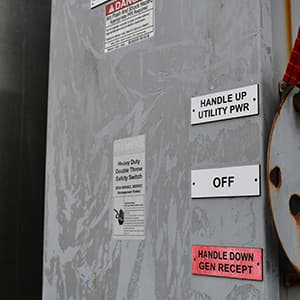
Required information on arc flash labels includes details such as nominal system voltage, arc flash boundary, and incident energy, as arc flash labeling requirements are defined by NFPA 70E to ensure safety during equipment examination, adjustment, service, or maintenance while energized. According to NFPA 70E, arc flash labels must provide critical safety data, including the nominal system voltage, the arc flash boundary, and either the available incident energy or the required PPE level.
Arc Flash Labeling: Labels Must Include Voltage, Arc-Flash Boundary, and PPE Info
Arc flash labels must contain specific information to ensure safety. First, they should list the nominal system voltage. This helps workers understand the electrical potential they are dealing with. Next, the arc-flash boundary must be clearly defined. This boundary indicates the distance at which a person could be exposed to a dangerous arc flash. It is crucial for maintaining a safe working distance.
Additionally, arc flash labeling requirements include personal protective equipment (PPE) information. This can be the minimum arc rating of clothing or the site-specific PPE category.
For example, if the incident energy is high, the label should specify the required PPE level. This ensures that workers are adequately protected when working near energized equipment.
Labels should also include the date of the last assessment and the equipment identification. This information helps track when the label was last updated and ensures compliance with safety standards.
Regular reviews of this information are essential to maintain accuracy and safety.
In summary, including voltage, arc-flash boundary, and PPE info on labels is vital. This information not only complies with NFPA 70E standards but also enhances workplace safety by clearly communicating hazards to qualified personnel.
Arc Flash Labeling: Visibility and Permanence of Arc Flash Labels
Ensuring the visibility and durability of arc flash labels is crucial for safety.
- Labels must include essential information: voltage, arc-flash boundary, and PPE info.
- Arc flash labels require permanent, visible markings that withstand environmental conditions.
- Place labels at eye level or on the front of equipment for easy visibility.
- Use materials resistant to moisture, chemicals, and UV exposure to prevent damage.
- Regularly review and update labels at least every five years or after system changes.
- Standardize label formats across the facility to enhance recognition and understanding.
- Ensure labels are easy to read; complex information can hinder their effectiveness.
Pro-Tip: Every time you change your electrical system, review all arc flash labels. Even small changes can affect incident energy levels and boundaries.
Keep a log of all modifications, no matter how minor. Schedule regular audits to compare your system drawings with what is installed. Use software to track label versions and update dates. Assign one person to oversee label accuracy and compliance. This helps prevent outdated labels from putting workers at risk. Train staff to report any changes that could affect arc flash calculations. Make label updates part of your change management process, not an afterthought.
Facility and Equipment Type Considerations for Arc Flash Labeling
Different facilities and equipment types have unique requirements for arc flash labeling. The specific labeling needs depend on the equipment's voltage, location, and the potential incident energy levels. For example, high-voltage equipment may require more detailed labels than low-voltage systems.
Additionally, the arc flash boundary must be clearly defined to ensure electrical safety. Labels should indicate the required PPE based on the calculated incident energy. Regular assessments are necessary to keep labels accurate and compliant with NFPA 70E standards.
Facility/Equipment Type | Labeling Requirements | Considerations | Frequency of Updates |
Industrial Plants | Detailed labels with PPE categories | High incident energy levels | Every 5 years or after modifications |
Commercial Buildings | Standard labels with voltage and boundary | Lower incident energy levels | Every 5 years |
Utility Substations | Comprehensive labels with all safety data | High voltage and complex systems | Annually or after major changes |
Residential Installations | Basic labels with minimal information | Low risk of arc flash incidents | As needed for equipment changes |
Incident Energy and PPE Requirements for Arc Flash Labeling
Incident energy levels and personal protective equipment (PPE) requirements are critical for arc flash labeling. Labels must clearly state the available incident energy at a specified working distance. This information helps workers understand the potential hazards they face when working near energized equipment.
For example, if the incident energy exceeds 40 cal/cm², the label should indicate that "Work Prohibited - No Safe PPE Exists." This warning is essential for preventing unsafe work practices. Conversely, for lower incident energy levels, the label should specify the minimum arc rating of clothing or the site-specific PPE category required.
Labels must also include the arc flash boundary. This boundary indicates the distance at which a person could be exposed to a dangerous arc flash. It is crucial for maintaining a safe working distance from energized equipment.
Regular updates to labels are necessary. Facilities should review and update labels at least every five years or sooner if significant changes occur in the electrical system. This ensures that the information remains accurate and compliant with NFPA 70E standards.
In summary, detailing incident energy and PPE requirements on arc flash labels is vital for workplace safety. Clear and accurate labeling helps protect workers from potential hazards associated with electrical equipment.